
Sign up for "Implementing a Kill Switch for AI" on Sep 22nd
Join the Unleash team to learn how to integrate runtime control in your AI strategy.
Is platform engineering replacing DevOps?

Alex Casalboni
Developer Advocate
December 2, 2025
Platform engineering has rapidly moved from emerging practice to industry standard. A 2024 Google Cloud/ESG survey found that 55% of large organizations have already adopted platform engineering, with 90% of those expanding their investment. Gartner predicts that by 2026, approximately 80% of software engineering organizations will have dedicated platform teams.
But does this growth mean DevOps is on its way out? The evidence suggests otherwise. Platform engineering builds on DevOps foundations, not against them.
The evolution from DevOps to platform engineering
DevOps emerged over a decade ago to break down silos between development and operations teams. Organizations implemented CI/CD pipelines, infrastructure as code, and monitoring solutions. The results were faster delivery cycles and improved collaboration.
But as organizations scaled into cloud-native architectures, new problems emerged. Teams adopting microservices discovered that having every team manage their own infrastructure created significant inefficiencies: duplicated effort, inconsistent implementations, and engineers spending excessive time on operational tasks.
Platform engineering arose from these growing pains. Rather than expecting every developer to master Kubernetes, cloud networking, and security compliance, organizations began creating dedicated teams to build self-service capabilities and standardized workflows, often called “golden paths.”
Spotify pioneered this approach with Backstage, their internal developer portal that provides opinionated, supported paths for common development tasks. The platform visualizes “blessed” tools and workflows, letting developers choose standardized approaches while still allowing flexibility when needed.
Key differences in approach and philosophy
DevOps champions end-to-end ownership. The “you build it, you run it” mentality encourages teams to build more reliable systems by maintaining responsibility through production. This remains valuable, but it doesn’t scale cleanly.
Platform engineering takes a different stance. Platform teams create internal developer platforms (IDPs) with standardized deployment methods, pre-configured security controls, and self-service capabilities. Not every developer needs to become an infrastructure expert. Understanding how DevOps and platform engineering differ helps organizations find the right balance.
Wayfair’s experience illustrates the efficiency gains. After building their platform using open-source tooling, they reported costs approximately one-third of what a custom-built solution would have required, while improving scalability and developer productivity.
The distinction: DevOps is a mindset emphasizing shared responsibility and automation. Platform engineering is infrastructure-as-product that enables DevOps practices at scale.
The role of self-service and developer experience
Developer experience has become a key business metric, and the data shows why. According to Atlassian’s State of Developer Experience report, 66% of developers lose eight or more hours per week to inefficiencies: tooling friction, environment setup, waiting on requests.
Platform engineering addresses this directly. Developers can provision environments, access databases, and deploy services through well-designed interfaces. No more filing tickets and waiting.
Twilio’s approach demonstrates the product mindset that successful platform teams adopt. As CEO Jeff Lawson has described, their platform team began by listening to engineers’ frustrations and built standardized pipelines that addressed genuine pain points.
The Google Cloud/ESG research quantifies the impact: 71% of organizations with mature platform engineering practices reported significantly faster time-to-market, compared to just 28% of less mature adopters. And 85% of surveyed companies said their developers now rely on the internal platform to succeed.
Organizational impact and team structures
Platform engineering introduces a more centralized model than traditional DevOps. A dedicated platform team serves the entire engineering organization, building reusable services. Operations expertise gets concentrated in one team that serves many.
This might seem like recreating old IT department silos. The difference: platform teams actively seek user feedback, measure success by how effectively they enable development teams, and iterate like any product team would.
The State of Platform Engineering 2024 report reveals that most platform teams are relatively new (approximately 56% have existed for less than two years). Yet experienced platform engineers are in high demand, commanding salaries roughly 27% higher than DevOps roles on average.
When to adopt
Small teams don’t necessarily need dedicated platform engineering. Organizations under 20-30 engineers can typically handle infrastructure needs with managed services and straightforward CI/CD.
The warning signs that it’s time to invest: onboarding takes weeks instead of days, multiple teams are solving the same infrastructure problems independently, or losing a single DevOps engineer could halt all deployments. More teams, stricter compliance requirements, and multi-cloud deployments all push toward consolidation.
Why they’re complementary
Platform engineering without DevOps culture recreates the problematic silos of traditional IT. The platform becomes another bottleneck, another ticket queue. The combination works because platform teams operate with a DevOps mindset, treating their internal customers’ productivity as their primary metric.
Organizations successfully implementing platform engineering still embrace core DevOps practices. Development teams maintain application ownership in production, use CI/CD, participate in on-call rotations, and take responsibility for their services’ reliability. The platform provides better tools for executing those responsibilities. For teams starting this journey, following platform engineering best practices from the outset prevents common missteps.
Runtime control: The missing layer
CI/CD pipelines get code to production, but they don’t control what happens after deployment. This gap explains why mature platform teams increasingly treat feature management as a core IDP capability.
Consider what happens when a deployment causes problems. Without runtime controls, teams face a difficult choice: roll back the entire deployment (losing all changes, including ones that work fine) or push forward with a hotfix under pressure.
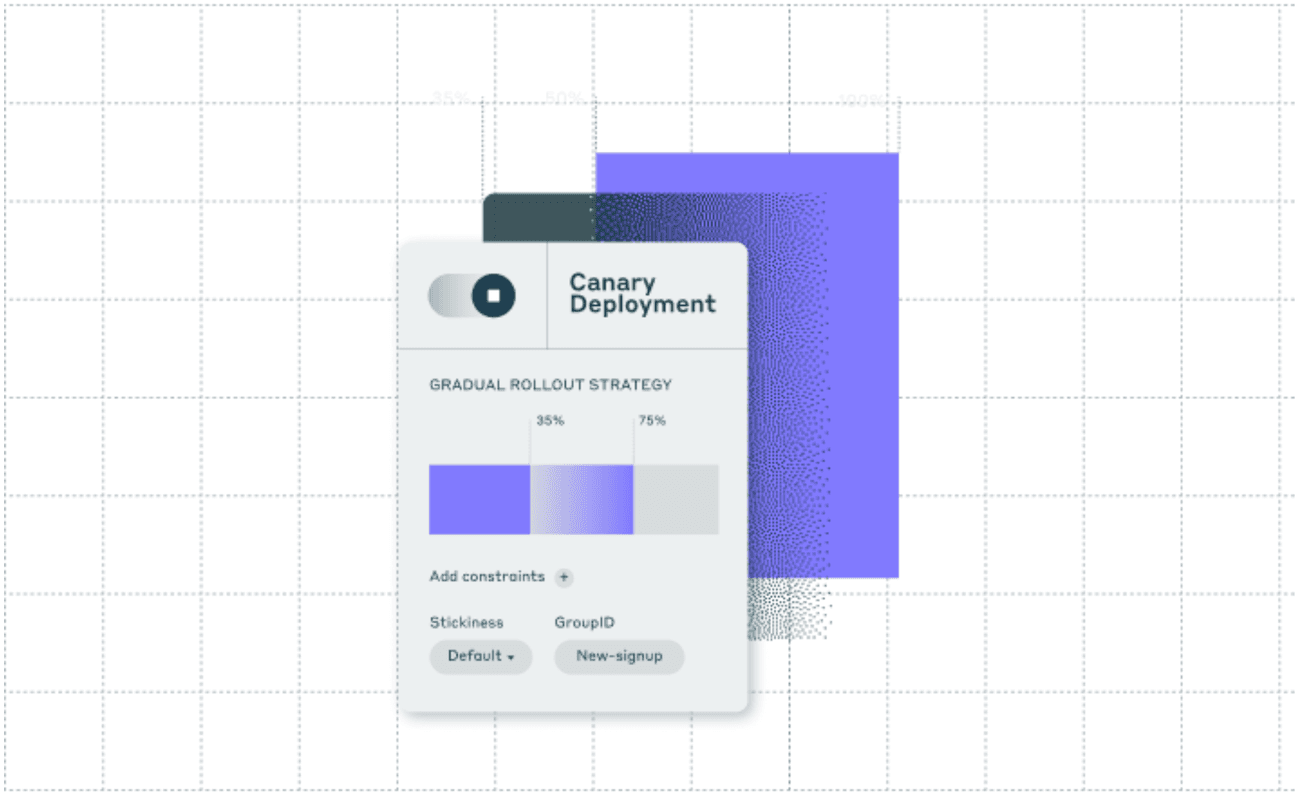
Feature flags provide granular control that CI/CD alone cannot. Teams can disable problematic features instantly without redeploying, roll out changes gradually to detect issues before full exposure, and run experiments to validate changes against real user behavior.
The most effective internal platforms embed this capability directly. When each team implements their own feature flag solution, you recreate the fragmentation problem platform engineering exists to solve. Centralized feature lifecycle management becomes part of the golden path. Teams get consistent tooling for kill switches, gradual rollouts, and experimentation, with the governance and audit trails that enterprise environments require.
Future outlook
Cloud-native architectures continue growing more complex. The proliferation of tools and the competitive pressure to ship faster point toward platform engineering becoming table stakes.
Yet one significant gap remains. The State of Platform Engineering 2024 report found that 45% of platform teams don’t measure their success metrics at all. No tracking of deployment frequency, lead time, developer satisfaction, or adoption rates. Without measurement, proving value becomes difficult and continuous improvement becomes guesswork.
Platform engineering won’t replace DevOps. The real question is how organizations can best combine these approaches for their specific context.
FAQs
When should an organization adopt platform engineering?
Organizations under 20-30 engineers rarely need a dedicated platform team. Managed services and straightforward CI/CD usually suffice. The tipping point comes when onboarding new engineers takes weeks, multiple teams independently solve the same infrastructure problems, or compliance requirements demand standardization. If losing one DevOps engineer would halt deployments, that’s a clear signal.
What skills do platform engineers need?
Kubernetes, cloud platforms (AWS/GCP/Azure), CI/CD systems, infrastructure as code (Terraform, Pulumi), and security fundamentals form the technical foundation. But product thinking matters just as much: the ability to gather user feedback, prioritize features, and measure impact. The role bridges traditional operations with software product development.
How do you measure platform engineering success?
Deployment frequency, lead time for changes, change failure rate, and mean time to recovery (the DORA metrics) provide the operational picture. Developer satisfaction scores and platform adoption rates matter equally. A platform nobody uses isn’t succeeding regardless of its technical quality. The 45% of teams that don’t measure at all struggle to demonstrate value or improve systematically.
What’s the difference between a platform team and a DevOps team?
A DevOps team builds and operates a specific product or service end-to-end. A platform team builds internal tools and infrastructure that other teams use. They’re one step removed from the business product. Platform teams treat internal developers as their customers, providing self-service capabilities and fielding feedback. Both roles require similar technical skills, but the focus differs: product features versus developer enablement.
Share this article