


Control who sees what and when with built-in strategies like gradual rollouts and custom constraints for geography, customer type, or telemetry.
Industry solutions
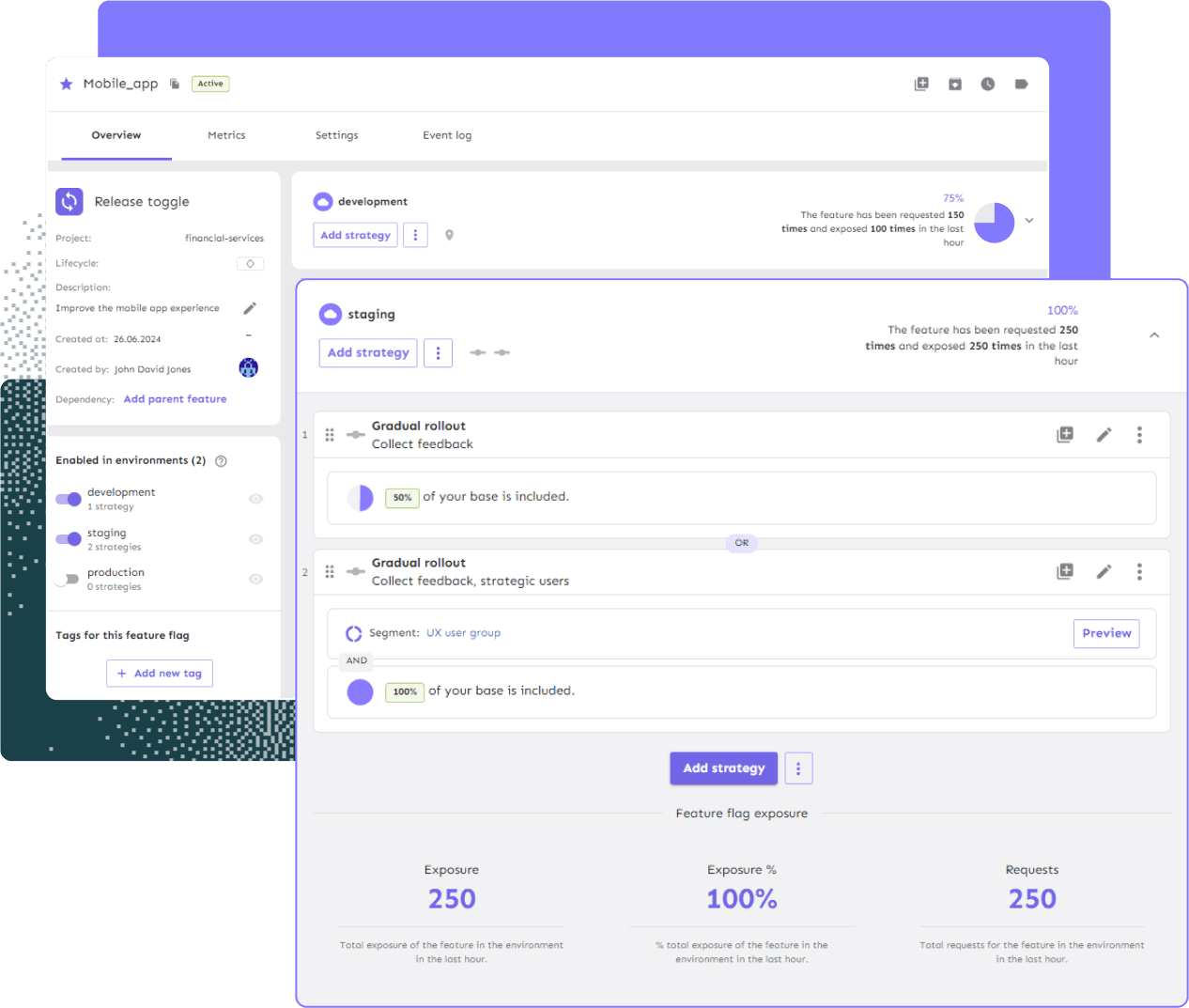
Ship portal, scheduling, billing, and care-coordination updates behind flags. Standardize rollout steps with templates, let safeguards widen exposure only when production signals stay healthy, and roll back instantly if errors, latency, or workflow issues appear.
Help security, compliance, and operations teams see who changed a flag, who approved it, which environment changed, and which patient or staff cohorts were affected. Use change requests and granular RBAC to match approval paths to risk.
Run Unleash self-hosted or in a single-tenant private instance, and evaluate flags locally in your applications. Feature targeting can happen without sending patient, provider, or facility context outside your infrastructure.
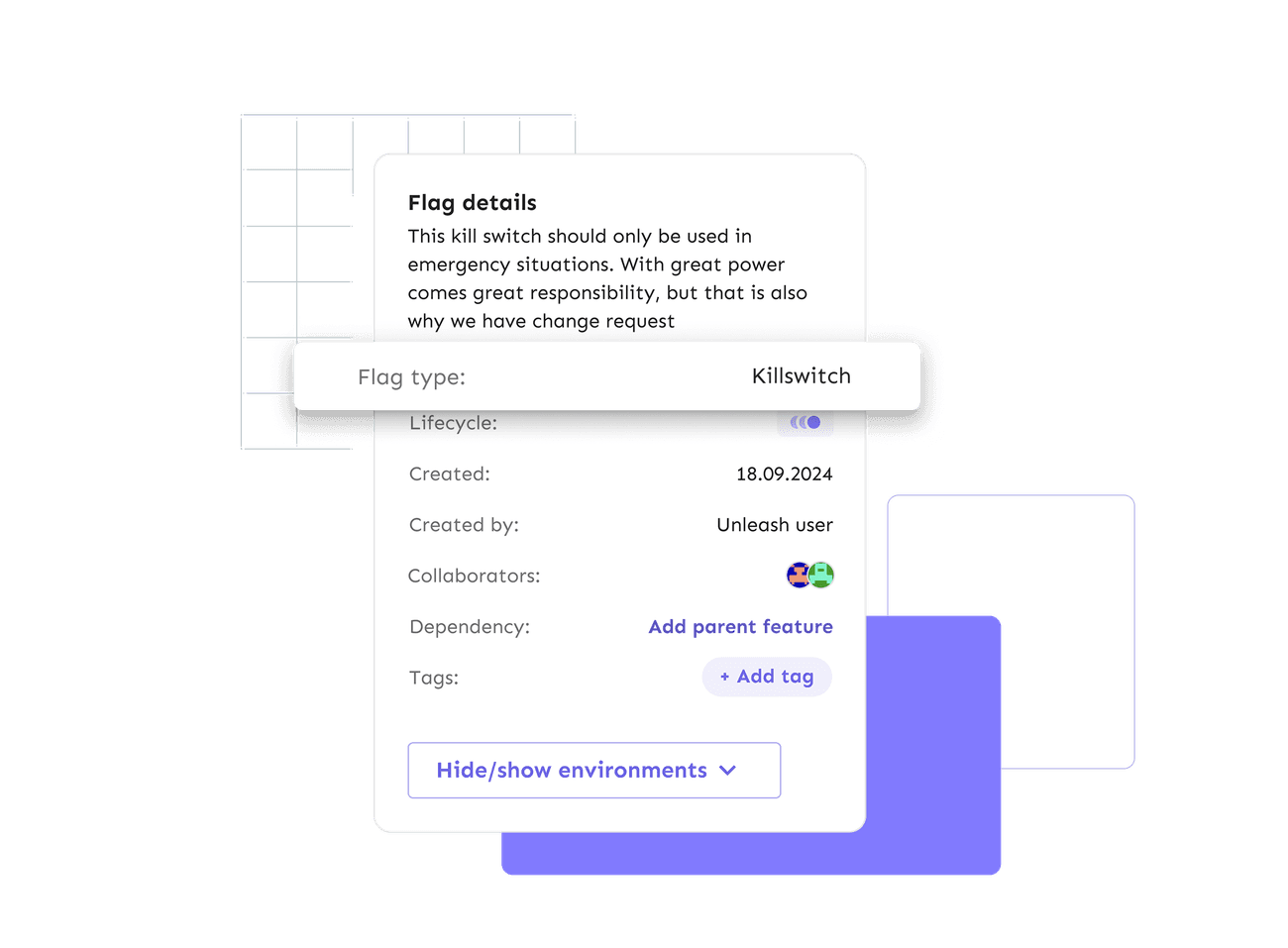
Introduce new healthcare experiences to internal teams, a pilot location, or a narrow patient cohort before full rollout. Validate adoption and operational impact in production without making every patient or staff member part of the first release.
And what happens when FeatureOps becomes part of how you ship.
Teams:

Ship behind flags, widen exposure when metrics stay healthy, and pause when signals drift.
Standardize templates, safeguards, and cleanup so squads share one FeatureOps posture.
Operations:

Map SSO, RBAC, audit trails, and change requests into existing control frameworks.
Pair progressive exposure with kill switches and instant rollbacks at runtime.
Control who sees what and when with built-in strategies like gradual rollouts and custom constraints for geography, customer type, or telemetry.
We flipped the most important flag we could when we went from our in-house system to Unleash. Right away we found that it was scalable, highly performant, resilient out of the box. And Unleash ended up being 1/3 the cost of our homegrown feature flag solution, while also improving the reliability and scalability of our platform.

Mark Quigley
Head of Internal Developer Platforms and Engineering Enablement, Wayfair
Our blog
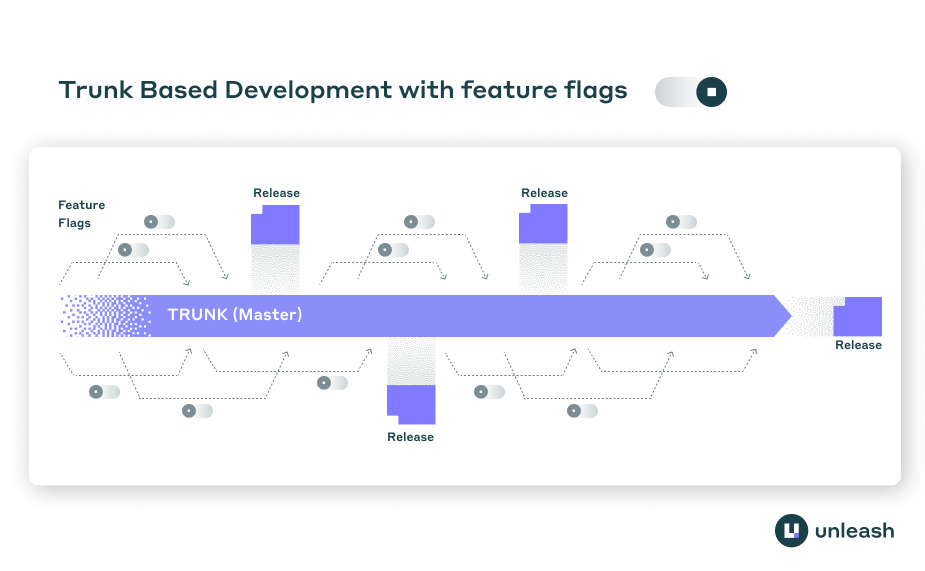
If you’ve spent your career managing complex software projects using git-flow or feature branches, you may struggle with shifting to Trunk-Based Development (TBD). While it may not be right for every project, there are good reasons to switch to TBD when it fits your process. This blog will help you understand TBD and evaluate […]


Feature flags decouple deployment from release so you validate production behavior with narrow cohorts first. That pattern supports the governance and audit expectations common in large enterprises.
You define thresholds for metrics like error rates or latency, and Unleash can pause rollouts when signals cross safety bands. That keeps widening exposure a data-backed decision rather than manual toggling.
Evidence typically includes who approved the change, which environment and cohorts were affected, and what metrics justified the next step. Detailed audit logs support that narrative.
See the gradual rollout guide for activation strategies, targeting, and operations notes.